



How to Clean a Breast Prosthesis: Washing, Drying & Everyday Care
Always check the manufacturer's care instructions before cleaning a breast prosthesis. Breast forms are made from different materials and may have different surfaces, adhesives, coatings or internal structures, so there is no single washing method that is correct for every product.
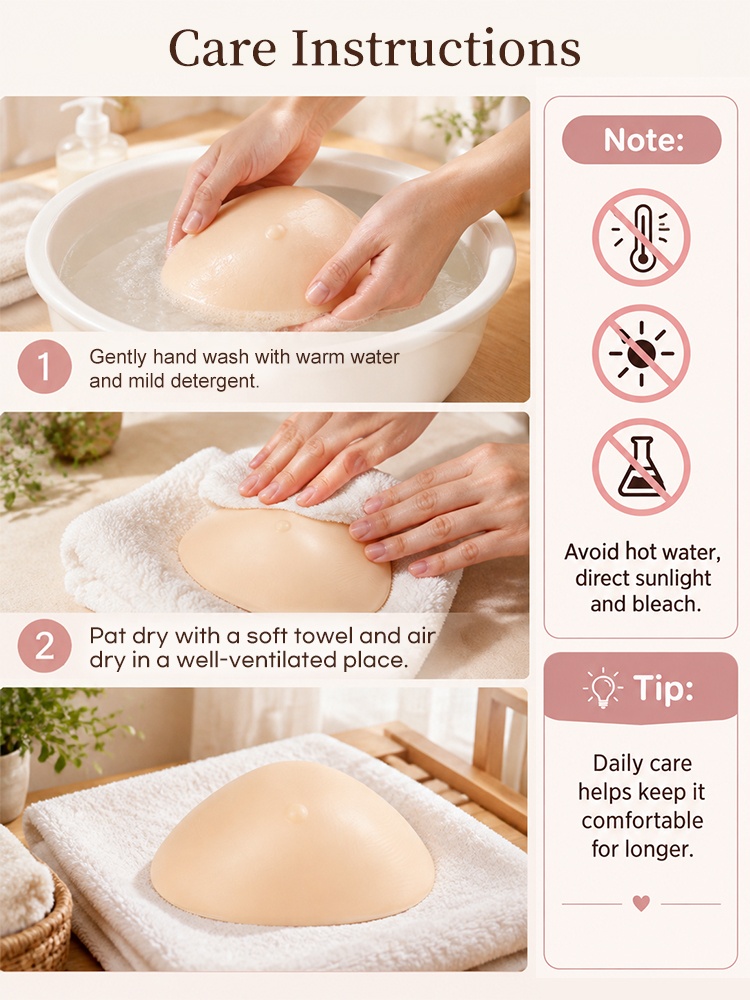
For many standard non-adhesive silicone breast forms, gentle hand washing with warm or lukewarm water and a mild soap or approved cleanser is common. They are then rinsed carefully and dried with a soft towel or according to the manufacturer's drying instructions.
Adhesive/contact forms, adjustable forms, foam forms and other specialist prostheses may need different care. When the product instructions differ from general advice, follow the product instructions.
Manufacturer instructions → material-specific care → gentle handling. Treat general breast-form cleaning advice as a starting point, not as permission to use the same soap, brush, water temperature or drying method on every prosthesis.
Step 1: Check the care instructions before you wash it
Start with the label, instruction booklet, manufacturer's website or information given to you by your prosthesis fitter.
This matters because even breast forms that look similar can require different care. A standard silicone form may tolerate mild soap and water, while a self-adhesive contact form may require a specific cleanser and a particular method for cleaning its adhesive surface.
Some adjustable breast forms also contain valves or other components that need to be protected from water.
If you are still unsure what type of form you have, see what a breast prosthesis is before choosing a cleaning routine.
Step 2: Use gentle daily care when your form allows it
For many conventional silicone breast prostheses, regular gentle cleaning helps remove perspiration, skin oils and everyday residue.
A typical routine may involve washing the form by hand in warm or lukewarm water with a mild soap or manufacturer-approved cleanser. Use your hands gently rather than scrubbing the surface with a rough sponge.
Rinse away cleanser residue carefully. Avoid wringing, twisting or sharply folding the breast form while it is wet.
Adhesive breast forms need different care
Do not automatically use the routine for a standard silicone form on an adhesive or contact prosthesis.
Standard silicone form
Many can be hand washed with mild soap or an approved breast-form cleanser, rinsed and gently dried. Check the instructions for your exact model.
Self-adhesive form
The adhesive surface may need a dedicated cleanser, brush or air-drying process. Using an unsuitable product can affect adhesion or damage the surface.
This difference is exactly why a universal “wash every breast form this way” rule is not reliable.
How should you dry a breast prosthesis?
Drying should be gentle. For many forms, that means patting the surface with a soft clean towel rather than rubbing vigorously.
Some products can then air dry naturally. Adhesive forms may specifically require air drying so the contact surface can recover properly.
Unless your manufacturer explicitly says otherwise, avoid trying to speed the process with high heat. A hairdryer, heater or other direct heat source may damage materials or coatings.
Breast Prosthesis Care: Do / Don't
- Read the manufacturer's care instructions
- Handle the form with clean, gentle hands
- Use the recommended cleanser or a permitted mild soap
- Rinse off cleanser thoroughly
- Use a clean soft towel when towel drying is allowed
- Store the form in a shape-supporting position
- Use bleach or harsh cleaners unless specifically approved
- Use alcohol, acetone or solvent cleaners on coated forms unless permitted
- Scrub every type of breast form with a brush
- Wring, twist or sharply fold silicone forms
- Place the form against direct heat to dry it
- Let pins, sharp nails or jewellery puncture the surface
How should you store a breast prosthesis?
Storage is part of breast prosthesis care. Leaving a soft form compressed under other objects can place unnecessary stress on its shape.
- Use the shaped cradle or original box if one was supplied
- Keep the prosthesis away from sharp objects
- Avoid storing it against direct heat
- Make sure it is appropriately dry before putting it away
- Follow any special storage instructions for adhesive or adjustable forms
What if the breast form looks damaged?
Not every visual change means the prosthesis has failed. For example, some manufacturers note that staining or discolouration can occur without changing function.
Physical damage is different. A puncture, tear, leaking silicone, separating layers or a contact surface that no longer behaves as expected deserves more attention.
- A puncture or visible tear
- Silicone or gel leaking from the form
- Layers or seams separating
- A major change in shape that does not recover
- An adhesive surface that remains damaged despite correct cleaning
- Damage that makes the form uncomfortable or difficult to position
Do not experiment with household glue, solvents or aggressive cleaning in an attempt to repair the surface. Ask the manufacturer, prosthesis supplier or fitter whether the form should be repaired, reassessed or replaced.
For more on replacement and product lifespan, continue to when a breast prosthesis may need replacing .
FAQ: How do you clean a breast prosthesis?
Can I wash a breast prosthesis with soap and water?
Many standard non-adhesive silicone breast forms can be hand washed with mild soap and warm or lukewarm water. Check your manufacturer's instructions first because adhesive and specialist forms may require different products.
How often should I wash my breast form?
Some manufacturers recommend daily cleaning for silicone breast forms, but frequency and method can vary. Follow the care schedule supplied with your particular prosthesis.
Can I use normal detergent on a breast prosthesis?
Only if the manufacturer allows it. Some forms permit mild soap or mild liquid detergent, while adhesive breast forms may require a specialist cleanser. Avoid strong detergents and solvents unless specifically approved.
Can I dry a breast prosthesis with a hairdryer?
Avoid direct heat unless your product instructions specifically allow it. Gentle towel drying or air drying is more commonly recommended for many breast forms.
How do I clean a sticky breast prosthesis?
Follow the instructions for that adhesive or contact form. Some manufacturers require a dedicated cleanser and cleaning brush followed by rinsing and air drying to protect the adhesive surface.
What should I do if my silicone breast prosthesis leaks?
Treat leakage or a puncture as product damage rather than a cleaning problem. Contact your prosthesis fitter, supplier or manufacturer for advice on repair or replacement.